
What you reading
Dental clinic website design in Dubai typically focuses on patient acquisition, trust building, and local visibility, not just aesthetics.
- Cost range: $800 – $5,000+ depending on features and integrations
- Core goal: turn visitors into booked appointments
- Must-have: booking system, trust signals, local SEO optimization
A high-performing clinic website is not just a digital brochure—it’s a patient conversion engine.
Essential features for a Dental Clinic Website Design in Dubai
A dental clinic website in Dubai must be designed around patient trust + easy booking + clear service presentation. Unlike other industries, healthcare decisions are emotional and trust-sensitive, which means your website must reduce hesitation and guide users toward action.
One of the most critical features is an online appointment booking system. Patients expect to book instantly without calling. A well-designed system should allow users to:
- Select service (cleaning, implants, cosmetic dentistry)
- Choose preferred time slots
- Submit details quickly (mobile-friendly form)
This reduces friction and increases conversion rates significantly, especially for mobile users.
Another essential feature is before-and-after case presentation. Dental services are highly visual, particularly for cosmetic procedures. Showing real results builds trust and helps potential patients understand the expected outcome. These sections should be:
- Organized by treatment type
- High-quality but optimized for speed
- Clearly labeled (real patient cases)
Trust is a major factor in healthcare decisions, so doctor profiles and credentials are equally important. Each dentist should have a dedicated section including:
- Experience and specialization
- Certifications and education
- Languages spoken (important in Dubai’s international market)
This directly supports EEAT (Experience, Expertise, Authority, Trust).
Another key element is clear service pages. Instead of listing all services on one page, high-performing websites create dedicated pages for treatments such as:
- Dental implants
- Teeth whitening
- Orthodontics
- Veneers
Each page should target specific search intent and include FAQs, pricing hints, and benefits. This improves both SEO and conversion.
WhatsApp integration and click-to-call buttons are also critical in Dubai. Many patients prefer instant communication over forms. Having these options visible (especially on mobile) significantly increases inquiries.
Additionally, fast loading speed and mobile optimization are non-negotiable. Patients searching for clinics often need quick decisions, and a slow or confusing website will lead them to competitors.
Finally, integrating reviews and testimonials builds credibility. Real patient feedback, especially with images or video, can dramatically influence decision-making.
In summary, a successful dental clinic website in Dubai must combine:
- Booking functionality
- Visual proof (before/after)
- Strong trust signals
- Mobile-first UX
- Clear service structure
Clinics that implement these features effectively can turn their website into a consistent source of new patients rather than just an informational page.
Local SEO and Google Maps integration for dental clinics in Dubai
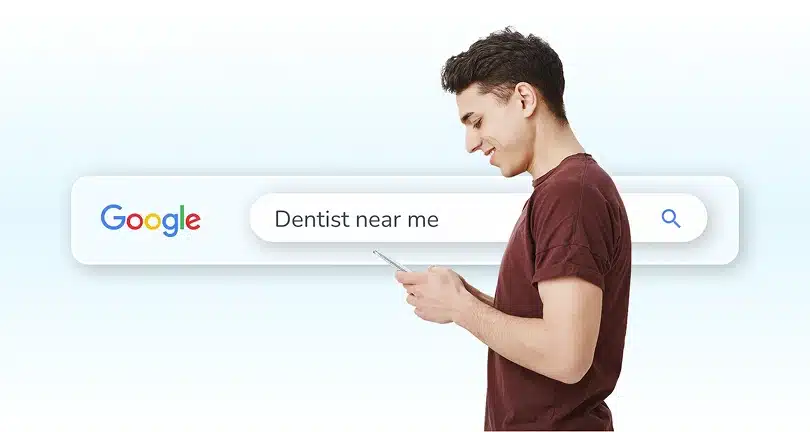
Local SEO is one of the most critical components of dental clinic website design in Dubai because patient acquisition is highly location-driven. Unlike global services, dental clinics rely on nearby searches such as “dentist near me,” “dental clinic in Dubai Marina,” or “teeth whitening Dubai.” If your website and local presence are not optimized for these queries, you miss a large portion of high-intent traffic.
At the center of local SEO is Google Business Profile (Google Maps) integration. A properly optimized profile allows your clinic to appear in the local map pack, which is often shown above organic search results. This placement significantly increases visibility and click-through rates. However, simply creating a profile is not enough—it must be fully optimized and connected to your website.
Key elements of a strong Google Maps presence include:
- Accurate business information (name, address, phone number)
- Correct category selection (e.g., dental clinic, cosmetic dentist)
- High-quality clinic images and real photos
- Consistent updates and posts
- Active review management (responding to patient feedback)
Consistency between your website and Google Business Profile is essential. The same NAP (Name, Address, Phone) details must appear across all platforms to build trust signals for search engines.
From a website perspective, location-based page structure is crucial. Instead of having a single generic page, clinics should create targeted pages for different areas in Dubai, such as:
- Dental clinic in Dubai Marina
- Dentist in Downtown Dubai
- Teeth whitening in Jumeirah
These pages should include localized content, directions, nearby landmarks, and patient-focused information. This improves relevance and increases the chances of ranking for specific location queries.
Another important factor is on-page local signals. Your website should clearly communicate location relevance through:
- Page titles and meta descriptions including “Dubai” or specific areas
- Embedded Google Maps showing the clinic location
- Structured data (LocalBusiness / MedicalBusiness schema)
- Location mentions within content (naturally integrated)
Embedding Google Maps directly on the contact page and service pages improves both UX and SEO by helping users find your clinic easily.
Reviews play a major role in local SEO performance. Clinics with a high number of positive reviews and active engagement tend to rank higher in Google Maps results. Encouraging satisfied patients to leave reviews—and responding professionally—builds both visibility and trust.
Another critical aspect is mobile-local behavior. Most local searches happen on mobile devices, often with immediate intent. Users searching for a dentist are likely to take action quickly, such as calling or booking. This makes mobile optimization, click-to-call buttons, and fast loading speeds essential for capturing these leads.
Content strategy also supports local SEO. Publishing articles related to dental treatments, patient questions, and local topics (e.g., “best dental clinic in Dubai for implants”) helps build authority and attract organic traffic. These articles can internally link to service pages, strengthening the overall SEO structure.
Finally, GEO optimization (Generative Engine Optimization) is becoming increasingly important. AI-driven search results prioritize structured, location-specific, and trustworthy content. Clinics that combine local SEO with structured data, clear service pages, and consistent branding are more likely to appear in AI-generated answers and recommendations.
In summary, local SEO and Google Maps integration are not optional—they are foundational for dental clinics in Dubai. A well-optimized local presence ensures that your clinic appears where patients are actively searching, increases visibility in high-intent queries, and drives consistent appointment bookings.
Mobile-first design for dental clinics in Dubai
Mobile-first design is no longer a best practice—it is a requirement for dental clinic website design in Dubai. A significant portion of patients search for dental services on their smartphones, often with immediate intent such as booking an appointment or finding directions. If your website is not optimized for mobile experience, you are losing high-intent patients at the most critical stage of their journey.
The foundation of mobile-first design is speed and performance. Mobile users expect websites to load in under a few seconds. Any delay can lead to drop-offs, especially when users are comparing multiple clinics. Optimizing images, using efficient code, and implementing caching are essential to ensure fast loading times. In Dubai’s competitive healthcare market, even small performance issues can directly impact conversion rates.
Another key aspect is simplified navigation. Mobile screens have limited space, so the user journey must be clear and frictionless. Important actions such as booking an appointment, calling the clinic, or opening WhatsApp should be immediately visible without excessive scrolling. A well-structured mobile layout typically includes:
- Sticky call-to-action buttons (Book Appointment / Call Now)
- Minimal menu with clear service categories
- Quick access to location and contact details
This reduces cognitive load and helps users take action faster.
Touch-friendly design is also critical. Buttons, forms, and interactive elements must be easy to use on smaller screens. Small or poorly spaced elements can frustrate users and reduce engagement. High-converting dental clinic websites ensure that:
- Buttons are large and clearly visible
- Forms require minimal input (short and optimized)
- Interactive elements respond quickly
Another important factor is mobile-specific user intent. Mobile users often have different behavior compared to desktop users. They are more action-oriented and less patient. For example, someone searching “dentist near me Dubai” on mobile is likely ready to contact or visit a clinic immediately. This means your website must prioritize:
- Click-to-call functionality
- Instant messaging options (WhatsApp integration)
- Clear directions via Google Maps
Failing to provide these options can result in lost opportunities, even if the user is highly interested.
Content structure also needs to adapt to mobile consumption. Long paragraphs and dense text can reduce readability on small screens. Instead, content should be broken into:
- Short paragraphs
- Bullet points
- Clear headings
This improves readability and keeps users engaged throughout the page.
Visual hierarchy becomes even more important on mobile. Key elements such as service highlights, pricing hints, and trust signals should appear early in the page. High-quality images and before-and-after results should be optimized for fast loading while still maintaining clarity.
Mobile-first design also supports SEO performance. Google primarily uses mobile-first indexing, meaning the mobile version of your website determines how it is ranked. A poorly optimized mobile experience can negatively affect rankings, even if the desktop version is well-designed.
Another advanced consideration is progressive enhancement. This means designing the core experience for mobile first, then enhancing it for larger screens. This approach ensures that all users, regardless of device, receive a smooth and functional experience.
Finally, continuous testing and optimization are essential. Analyzing mobile user behavior through analytics tools helps identify drop-off points, slow pages, and conversion issues. Regular improvements based on real data can significantly increase performance over time.
In summary, mobile-first design for dental clinics in Dubai focuses on speed, simplicity, accessibility, and action-oriented UX. Clinics that prioritize mobile experience can capture more high-intent users, improve engagement, and convert more visitors into patients.
Conversion elements (CTA, trust signals) for dental clinic websites
Conversion elements are the core of any high-performing dental clinic website in Dubai. Without strong conversion design, even high traffic from SEO or ads will not translate into actual patient bookings. In healthcare, where trust and urgency both play a role, the website must guide users clearly and confidently toward taking action.
The most critical component is the Call-to-Action (CTA). A dental website should never rely on a single CTA at the bottom of the page. Instead, high-converting websites use multiple strategically placed CTAs throughout the user journey. These include:
- “Book Appointment” buttons above the fold
- Sticky CTAs that remain visible while browsing
- Inline CTAs within service pages
- Mobile-specific actions like “Call Now” or “WhatsApp”
The goal is to reduce friction and make it easy for users to act at any moment. In Dubai’s fast-paced environment, users often make quick decisions, so accessibility of CTAs directly impacts conversion rates.
Another essential element is trust signals. Dental services involve health and personal appearance, which makes patients more cautious. Without trust, users will hesitate—even if they are interested. Effective trust elements include:
- Before-and-after treatment images
- Verified patient testimonials
- Google review ratings embedded on the site
- Certifications, licenses, and affiliations
- Doctor profiles with real credentials
These elements should not be hidden on a separate page—they must be integrated throughout the website, especially near CTAs.
Visual proof and transparency also play a significant role. Showing real results from previous patients helps reduce uncertainty. For example, a teeth whitening or veneer page should include actual case studies with clear outcomes. This aligns with EEAT principles by demonstrating real experience and expertise.
Another important factor is urgency and reassurance. Users need to feel that taking action is both safe and beneficial. This can be achieved through:
- “Same-day appointments available”
- “Free consultation” or “first visit discount”
- Clear response time expectations (e.g., “We respond within 10 minutes”)
These elements encourage users to act immediately rather than postponing their decision.
Form design is another critical conversion factor. Many clinics lose leads due to long or difficult forms. High-converting forms should:
- Request only essential information
- Be easy to complete on mobile
- Provide instant confirmation after submission
Reducing friction in forms can significantly increase conversion rates.
Consistency in messaging is also important. The promise made in ads, search results, or headlines must match what users see on the page. Any mismatch can create confusion and reduce trust.
Another advanced conversion pattern is multi-channel contact options. Not all users prefer the same communication method. Providing multiple options such as:
- Phone calls
- WhatsApp messaging
- Online booking forms
ensures that users can choose what is most comfortable for them.
Speed and performance also influence conversion. A slow-loading page or delayed interaction can break the user’s intent and lead to drop-offs. Optimized performance ensures that users can complete actions without frustration.
Finally, data-driven optimization is what turns a good website into a high-performing one. Tracking user interactions, analyzing conversion rates, and testing different CTA placements or messaging helps continuously improve results. Conversion is not a one-time setup—it is an ongoing process.
In summary, conversion elements in dental clinic website design Dubai focus on clarity, trust, accessibility, and speed. Clinics that implement strong CTAs, visible trust signals, and frictionless user journeys can significantly increase patient inquiries and maximize the value of their website.
Common mistakes dental clinics make with their websites
Many dental clinics in Dubai invest in building a website but fail to turn it into a consistent source of patient acquisition. The issue is rarely the absence of a website—it is the presence of critical mistakes in strategy, structure, and execution. In a competitive healthcare market, even small inefficiencies can significantly reduce visibility, trust, and conversion rates.
One of the most common mistakes is treating the website as a static brochure instead of a conversion system. Many clinics create a website just to “have an online presence,” without designing it to generate appointments. These websites often lack clear CTAs, optimized user flows, and lead capture mechanisms. As a result, users visit the site, browse briefly, and leave without taking action.
Another major issue is weak or non-existent local SEO. Dental clinics rely heavily on location-based searches, yet many websites are not optimized for queries like “dentist in Dubai Marina” or “teeth whitening Dubai.” Without proper local SEO structure—such as location pages, optimized Google Business Profile, and consistent NAP details—the website fails to appear in high-intent search results. This forces clinics to rely excessively on paid ads, increasing long-term marketing costs.
Poor mobile experience is another critical mistake. A large percentage of patients search for clinics on their phones, often with immediate intent. However, many clinic websites are still not fully optimized for mobile devices. Slow loading times, difficult navigation, and hard-to-use forms can lead to high bounce rates. In such cases, even strong demand does not translate into bookings.
Another common problem is lack of trust signals. Healthcare decisions require confidence, yet many websites fail to provide sufficient proof of credibility. Missing elements such as patient testimonials, before-and-after images, doctor credentials, and certifications create hesitation. In a market like Dubai, where patients have multiple options, lack of trust can quickly push users toward competitors.
Content structure is also frequently overlooked. Some clinics place all services on a single page without proper organization. This not only reduces SEO performance but also makes it harder for users to find relevant information. High-performing websites create dedicated pages for each service, optimized for specific search intent and supported by clear explanations and FAQs.
Another mistake is overcomplicated user flows. Long forms, unclear navigation, and too many steps between landing and booking create friction. Users prefer quick and simple interactions, especially when they are comparing multiple clinics. Any unnecessary complexity reduces the likelihood of conversion.
It is not useful for this purpose when it comes to common problems. Clinics that do not track user behavior, conversion rates, or traffic sources miss valuable insights. Without analytics, it becomes difficult to identify what works and what needs improvement. This leads to stagnation and missed growth opportunities.
Performance issues are also underestimated. Heavy images, unoptimized code, and poor hosting can slow down the website. This not only affects user experience but also impacts SEO rankings. In a fast-paced digital environment, users expect instant access—any delay can result in lost patients.
Finally, many clinics lack a long-term strategy. A website is not a one-time project—it requires continuous updates, SEO improvements, and optimization based on user behavior. Clinics that neglect ongoing improvements gradually lose visibility and competitiveness.
In summary, the most common mistakes in dental clinic website design Dubai revolve around lack of strategy, poor UX, weak SEO, and missing trust elements. Clinics that avoid these pitfalls and focus on performance, structure, and patient experience can transform their website into a powerful and consistent source of new patients.
If your clinic website is not consistently generating new patient inquiries, the issue is not traffic—it’s conversion, structure, and local visibility.
At HoccoTech, we design dental clinic websites in Dubai that focus on real patient acquisition, not just design.
-
Conversion-focused UX (built for bookings, not browsing)
-
Local SEO + Google Maps optimization for Dubai
-
Mobile-first performance for high-intent users
-
Integrated booking systems + WhatsApp + CRM
-
Trust-driven design (before/after, reviews, doctor profiles)
Whether you are launching a new clinic or upgrading your current website, we help you build a system that turns visitors into booked appointments.
👉 Explore our main service:
👉 See pricing details: